Waterlase laser dentistry offers a calmer option for patients who fear pain, needles, and the dental drill. For many people, just picturing the dental chair is enough to cause stress. This minimally invasive laser treatment reduces discomfort and makes the whole dental visit easier. Dentists have used lasers since the 1990s, but many patients are …

Waterlase laser dentistry offers a calmer option for patients who fear pain, needles, and the dental drill. For many people, just picturing the dental chair is enough to cause stress. This minimally invasive laser treatment reduces discomfort and makes the whole dental visit easier.
Dentists have used lasers since the 1990s, but many patients are only now hearing about them. Using a laser in your mouth can sound scary at first. In practice, it often means less pain, less bleeding, faster healing, and fewer numbing shots.
Does Waterlase Hurt?
For most patients, not really. Waterlase treatment is typically gentle, with minimal discomfort. The laser works with water and light energy rather than a conventional drill, so many patients need little or no numbing. The feeling is often described as a soft, cool spray instead of pain.
If you have sensitive teeth or feel nervous about dental visits, Waterlase can make treatment far more comfortable. Many patients find their appointment quicker and easier than they expected compared to traditional dental care.
What Waterlase Laser Dentistry Is and How It Reduces Pain
If the sound of the drill is the part of a dental visit you dread most, here’s a simple look at the alternative.
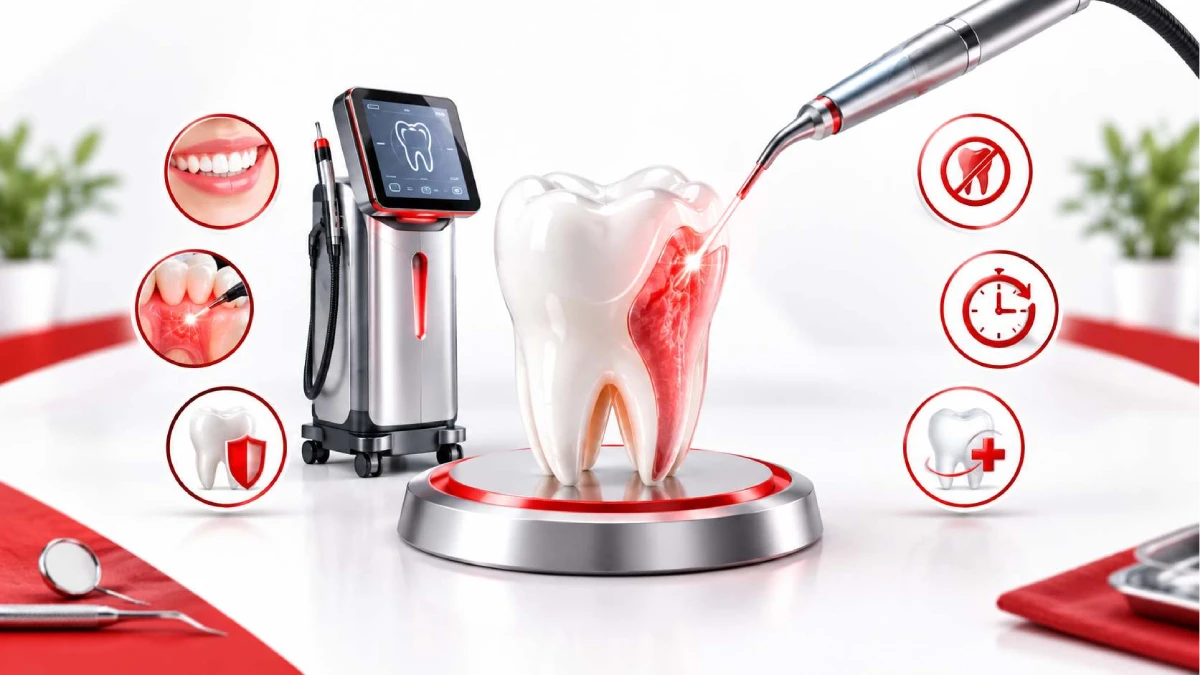
Waterlase is a dental laser. Instead of a spinning drill, it uses a focused beam of light energy to remove decay and prepare a tooth for a filling.
It belongs to the erbium family of lasers. Simply put, the light it uses is ideal for cutting hard tooth tissue such as enamel and dentin (the layer just beneath the enamel). Older dental lasers struggled with hard tissue and could overheat or crack the tooth. Erbium lasers solved that problem and made laser-based tooth preparation a real option.
The “water” in Waterlase serves a real purpose. The laser works alongside a fine water spray that keeps the area cool and rinses away debris as treatment goes on.
How Waterlase helps reduce pain:
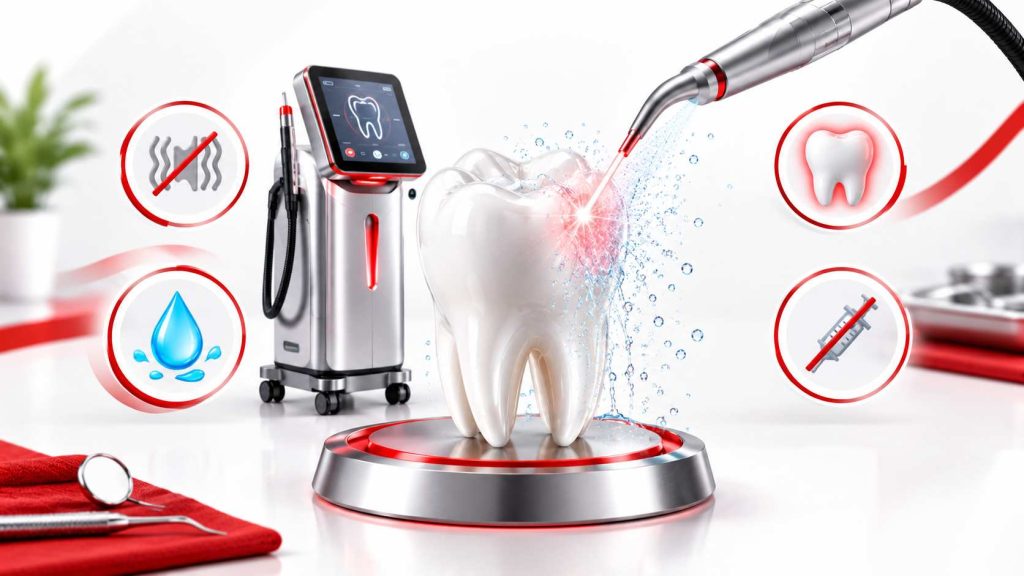
To be clear, Waterlase doesn’t replace every dental tool. Traditional instruments are still needed for some steps, such as removing old metal fillings.
What You’ll Hear and Feel During Treatment
Most patients hear a light popping sound and feel cool water, and that’s about it. Before I start, I explain each step and show you the small laser handpiece. Instead of the old drill noise, you’ll hear a quick, steady pop, like tiny bubbles bursting.
Water flows over the tooth the whole time, so it feels wet and cool. You may notice a brief tingle or a moment of warmth that fades in seconds. If you feel anything sharp, raise your hand, and I’ll lower the power, pause, or add numbing.
What’s normal during treatment:
- Cool water on your tooth, lips, and tongue
- A soft popping or clicking sound
- A brief tingle in the tooth
- A faint smell as decay is removed
Afterward, some patients have mild sensitivity to cold for a day or two. A 2020 review in Dentistry Journal found that 8 of 10 studies reported less pain with erbium lasers like Waterlase.
Pain Levels by Procedure
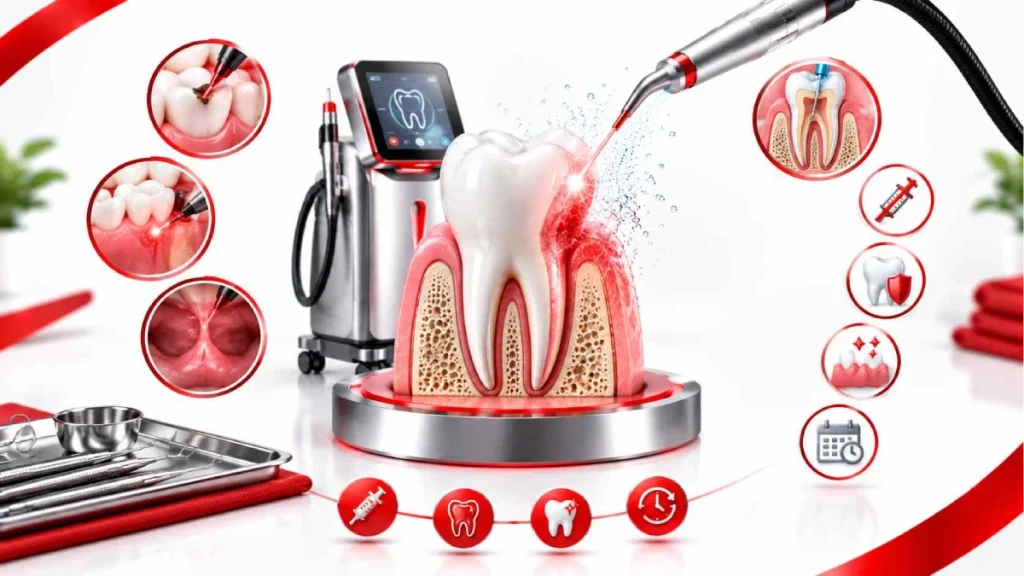
Pain with Waterlase depends on the procedure, and most small treatments cause little discomfort. Studies on erbium lasers, like Waterlase, show low pain for fillings, gum work, and frenectomies. Root canals are different and need numbing.
Small Cavities and Fillings
Small fillings cause the least discomfort, and many need no numbing shot. The laser removes decay in the outer enamel without grinding or vibration. You feel cool water and light tapping.
A 2020 review in Dentistry Journal found that 8 of 10 studies reported less pain during laser cavity prep. However, the same review said results are not yet predictable for every patient. Deep cavities near the nerve may still need numbing.
Gum Treatment and Reshaping
Laser gum treatment causes less pain after surgery than a traditional scalpel. I use it for gum reshaping, like fixing a gummy smile, and for crown lengthening. A numbing gel or small shot keeps you comfortable during the visit.
A 2025 systematic review in Exploration of Medicine found Er,Cr:YSGG lasers caused less postoperative pain than conventional flap surgery. The same review also found laser patients reported better satisfaction and faster recovery. Expect mild gum tenderness for a few days.
Frenectomy (Tongue-Tie and Lip-Tie)
A laser frenectomy causes little pain, and most children need no pain medicine afterward. The procedure releases a tight band of tissue under the lip or tongue. It takes only a few minutes and rarely needs stitches.
In a randomized study of 50 children, only 2 needed a single dose of paracetamol after laser frenectomy. Also, a 2021 study using Waterlase iPlus found faster healing at 1 and 2 weeks than with a diode laser.
Root Canals and Deeper Work
Root canals need numbing, even when the laser is part of treatment. Here, the laser helps clean and disinfect the root canals. It does not replace the full root canal procedure.
A randomized trial of 170 patients found similar pain after root canals with either the Biolase laser or standard bleach rinse. So the laser helps with cleaning, not with soreness afterward. Expect 2 to 3 days of mild tenderness, which over-the-counter pain relievers can manage.
Is Waterlase Worth the Cost?
The answer depends on your needs. If drills or needles make you very anxious, a calmer, more comfortable visit can be well worth it. If you need precise gum contouring in a visible part of your smile, the control a laser offers is another real benefit.
Insurance coverage depends on the procedure and your plan, not on whether a laser is used. Many plans help pay for the treatment itself, such as a filling or gum procedure. Any added technology fees can vary. Ask for a clear cost estimate before treatment so you know what to expect and what your options are.
Think about long-term value too. The cheapest option isn’t always the best one. A good treatment plan weighs comfort, how much natural tooth is saved, how long the results last and how well the treatment solves the problem.
Will You Still Need a Numbing Shot?
For small fillings, most patients don’t need a numbing shot, but deep cavities and root canals often do. The laser calms the tooth nerve while it works, an effect called laser analgesia. In one study of 103 patients, only 6% needed a numbing injection with an erbium laser.
You’ll likely need numbing for deep decay, cracked or painful teeth, or visits with 3 or more fillings. You can ask for a shot at any point, even mid-treatment. Without one, there’s no numb lip afterward, so you can eat and talk right away.
What the Research Says About Laser Comfort
Research on laser comfort is real, active and still growing. Studies show erbium lasers like Waterlase reduce pain for many patients, but not for everyone. That’s why we describe laser care as a comfort option, not a guarantee.
A 2020 systematic review by Poli et al. in Dentistry Journal looked at 10 clinical studies on laser analgesia (a reduced pain response). Eight found the laser reduced pain during cavity prep, and two found no difference. However, of the three split-mouth studies analyzed statistically, only one showed a significant pain-reducing effect. In a split-mouth study, each patient has one tooth treated with each method, so the two can be compared directly.
The review also cites one study where fewer than 2% of patients needed a numbing shot. Still, the authors concluded that laser comfort isn’t yet predictable. Results depend on the dentist’s technique and laser settings.
The newest research shows the field maturing. A randomized split-mouth trial published September 22, 2026 in Lasers in Medical Science enrolled 90 children aged 6 to 10 with decay in baby teeth. Each child had one decayed tooth treated with a traditional drill and the other with an Er,Cr:YSGG laser. Researchers looked beyond pain alone. They measured treatment success, filling quality, chewing function, side effects and anxiety levels.
One important note: much of this research involves children, so adults may respond differently.
The bottom line: Research supports laser care as a way to improve comfort and reduce the need for numbing injections for many patients. Results vary from person to person, and an exam is the best way to know what’s right for your tooth. For more plain-language dental guides, visit the Pike Creek Dental Health Corner.
Waterlase vs. the Traditional Drill
Waterlase causes less pain, noise, and vibration than a drill, but the drill is faster for large fillings. A traditional drill, also called a handpiece, spins a small metal bur at high speed to grind away decay. That spinning creates the high-pitched whine, the vibration in your jaw, and some heat in the tooth.
Waterlase removes decay with laser light and a cool water spray instead, so there’s no grinding. One report found the laser lowered tooth pulp temperature by 0 to 2°C, while a wet drill raised it by 3 to 4°C.However, the drill can remove old metal fillings and works faster on big cavities, so I often use both tools in one visit.
What Waterlase Can’t Do
Waterlase can’t cut through metal, so it can’t remove old silver fillings or metal crowns on its own. I take those out with a drill first, then use the laser to clean the tooth underneath. Teeth with deep decay, large old fillings, or cracks may also need traditional tools, a crown, or another repair.
The laser doesn’t replace your regular care, like checkups, X-rays, cleanings, and daily brushing. For advanced gum disease, I combine the laser with deep cleaning, like scaling and root planing, plus regular gum maintenance. Some steps, like shaping a tooth for a crown, are faster and more precise with a drill, so I choose the tool that gives your tooth the longest-lasting result.
What to Expect After WaterLase: Comfort and Recovery
Recovery after WaterLase depends on the procedure, and most people return to normal routines quickly after a small laser filling. After gum or soft-tissue treatment, the area may feel tender for a few days, so your dentist may suggest gentle brushing, soft foods or special rinses.
Laser soft-tissue care is often linked to less bleeding and swelling, but good aftercare still matters. Follow your dentist’s instructions and call the office if pain, swelling or bleeding gets worse instead of better.
If you’ve had difficult dent]al visits before, tell your dentist so they can take breaks, explain each step or discuss numbing options in advance. Technology helps, but caring communication is just as important for a gentle experience.
FAQs
Is Waterlase painful?
For most patients, no. Most people feel only cool water and a light popping sound, and many small fillings need no numbing shot.
What is the most painful dentist operation?
Wisdom tooth removal and root canals are often seen as the most uncomfortable dental procedures. With proper numbing, though, most patients feel pressure rather than sharp pain.
What are the downsides of laser dentistry?
Lasers can’t cut through metal, so they can’t remove old silver fillings or metal crowns on their own. They can also be slower on large cavities, and some offices charge more for laser treatment.
What are two drawbacks of laser therapy?
Laser treatment may cost more than traditional care, and not every dental office offers it. It also can’t handle every procedure, like removing metal fillings or shaping teeth for some crowns.
Is laser dentistry completely painless?
Not always. Most patients feel little discomfort, but deep cavities, root canals, and sensitive teeth may still need numbing.
How long does a laser filling take?
A small laser filling takes about 15 to 30 minutes. Larger or multiple fillings take longer.
Can Waterlase be used on sensitive teeth?
Yes, and many patients with sensitive teeth find it more comfortable than the drill. Tell your dentist about your sensitivity so they can adjust the laser settings or add numbing.
Is Waterlase still used in 2026?
Yes, Waterlase is still widely used in dental offices in 2026. Biolase continues to make and support Waterlase models, like the Waterlase iPlus and Waterlase MDX.
Conclusion
Fear of pain shouldn’t stop you from getting the dental care you need. Waterlase makes treatment more comfortable for most patients, with less drilling, fewer numbing shots, and faster healing. If anxiety has kept you away, laser care may be the gentler option you’ve been looking for.
Want to know what to expect from your treatment? Book an appointment with our Boca Raton team to find out if Waterlase is right for your tooth.