If you’ve ever had a toothache, you know how sharp and distracting it can be. Dental pain is your tooth’s way of telling you something is wrong. The type of pain, and what sets it off, can point to the cause and the care you need. Some tooth pain is mild and fades fast. Other …

If you’ve ever had a toothache, you know how sharp and distracting it can be. Dental pain is your tooth’s way of telling you something is wrong. The type of pain, and what sets it off, can point to the cause and the care you need.
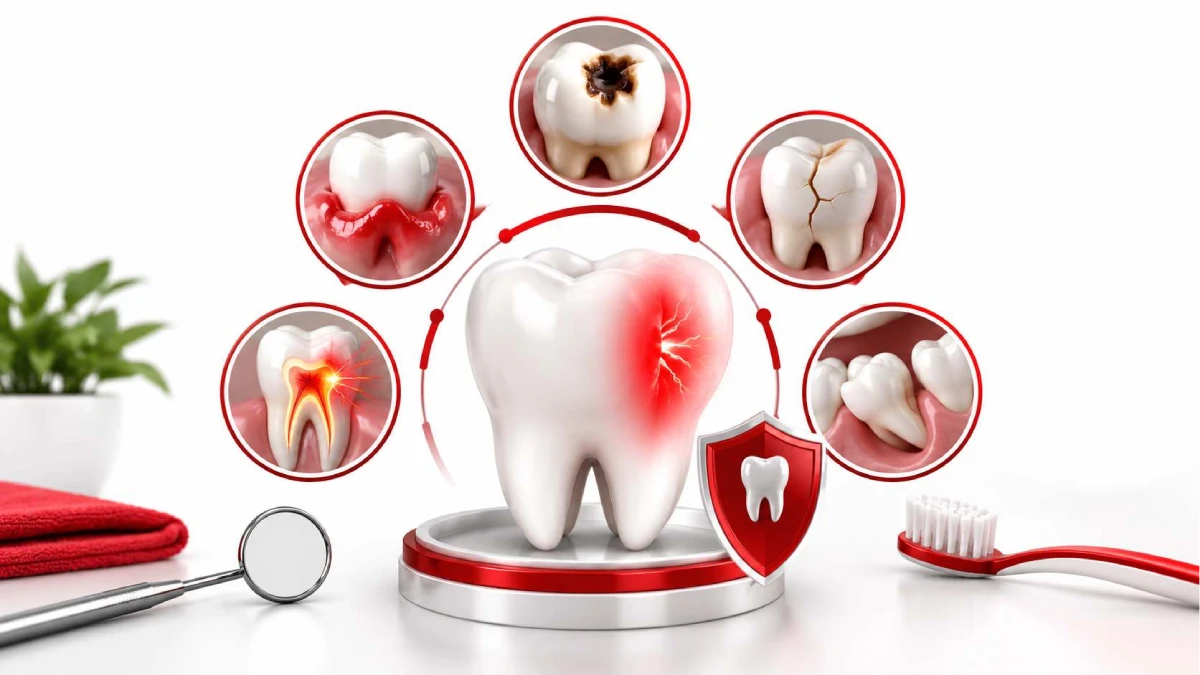
Some tooth pain is mild and fades fast. Other pain signals a problem that gets worse without treatment. Below, I explain the five most common causes, how to spot each one, and what to do next.
What Is Dental Pain?
Dental pain is any pain in or around a tooth, the gums, or the jaw. It starts when something irritates the pulp, the soft core that holds the nerve. Common triggers are cold drinks, sweets like candy, and hard foods like ice. Pain can also spread from the sinuses or the jaw joint (TMJ).
How it feels points to the cause:
- Quick zing with cold: sensitive teeth or a small cavity
- Sharp jolt when biting: a cracked tooth or loose filling
- Dull, steady ache: teeth grinding or gum disease
- Throbbing pain at night: infection or an abscess
The World Health Organization estimates that oral diseases affect nearly 3.7 billion people. Untreated tooth decay is the most common health condition worldwide. That is why I ask three questions at every visit. Where does it hurt, what sets it off, and how long does it last? As a result, we can narrow the cause before any X-ray.
5 Common Causes of Dental Pain
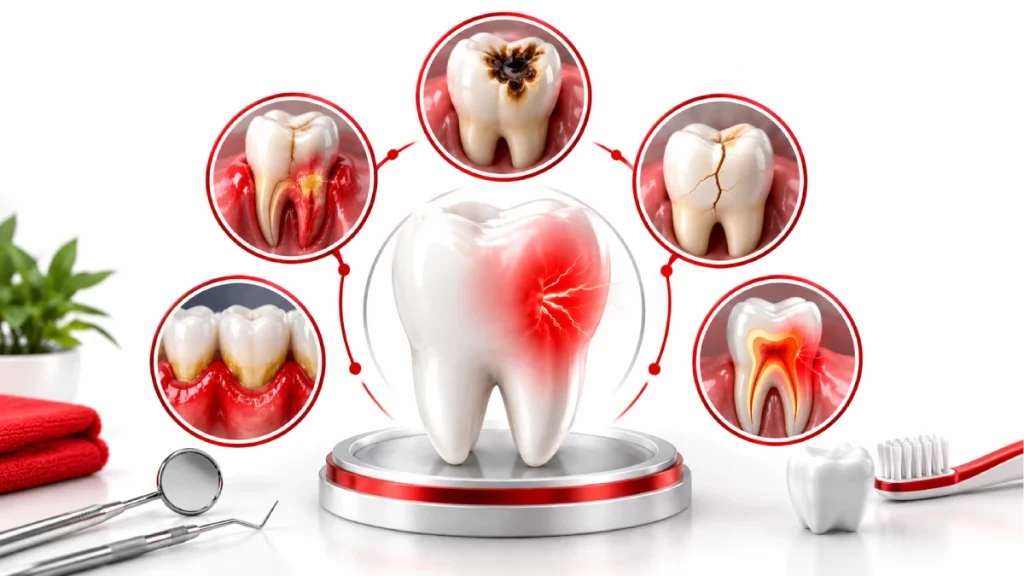
Most dental pain comes from five problems: decay, infection, cracks, gum disease, and sensitivity. As an endodontist, I treat the inside of the tooth, where the nerve lives. Many patients reach my Boca Raton office after weeks of pain no one could explain. Here is how I tell these five causes apart.
1. Tooth Decay (Cavities)
Tooth decay is damage caused by acid from germs in plaque. These germs feed on sugars from foods like soda, candy, and crackers. The acid eats through the enamel, then moves into the softer dentin. About 2 billion people worldwide have decay in their permanent teeth, according to the WHO.
A small cavity rarely hurts. Pain starts when decay reaches the nerve and inflames it, a condition called pulpitis. That is often the point where a patient gets referred to me.
Signs to watch for:
- A quick twinge with sweets, ice cream, or cold water
- Food catching in the same spot
- Cold pain that lasts more than 30 seconds after the cold is gone
That last sign matters most. When cold pain lingers, the nerve is often too inflamed to recover.
What to do: See your dentist within a few days. Caught early, a filling fixes it. If the nerve is involved, a root canal removes the inflamed tissue and saves the tooth.
2. Tooth Infection (Abscess)
An abscess is a pocket of infection at the root tip, caused by bacteria inside the tooth. It forms when deep decay or a crack lets germs reach the pulp. The pulp dies, and the infection spreads into the jawbone. This is the pain behind most of the emergency calls we get.
Signs to watch for:
- Throbbing pain that keeps you awake
- Pain when you tap the tooth or chew
- A small bump on the gum that leaks a salty taste
- Swelling in the cheek, jaw, or under the chin
Patients are often surprised by one thing. Severe pain can stop overnight. The tooth has not healed. The nerve has died, or the infection found a path to drain. The infection is still there, and it is still growing.
What to do: Call an endodontist or dentist the same day. A root canal clears the infection and keeps your natural tooth. In our office, a CBCT 3D scan shows how far the infection has spread before we begin. Antibiotics help with spreading swelling, but they never fix the tooth alone.
3. Cracked, Chipped, or Injured Tooth
A cracked tooth hurts because biting flexes the crack and irritates the nerve. I see cracks most in lower back molars and teeth with large old fillings. Common causes include chewing ice, biting a popcorn kernel, and grinding at night. An old sports injury can cause pain years later, too.
Signs to watch for:
- Sharp pain when you release your bite
- Pain with certain foods, like nuts or chewy bread
- Pain that comes and goes for weeks
Cracks are some of the hardest problems to find. Most don’t show on standard X-rays. I use a bite test, checking each cusp one at a time, along with CBCT imaging.
What to do: Don’t wait for the pain to settle. A crack can grow deeper with every bite. Found early, a crown holds the tooth together. If the crack reaches the nerve, a root canal comes first. A crack that splits the root means the tooth cannot be saved.
4. Gum Disease (Gingivitis and Periodontitis)
Gum disease is a bacterial infection of the gums and the bone that supports your teeth. It starts as gingivitis, with red gums that bleed when you brush. Good cleanings and daily flossing reverse it at this stage. Left alone, it becomes periodontitis, and the bone around the teeth breaks down. Severe gum disease affects more than 1 billion people worldwide, according to the WHO.
Signs to watch for:
- Gums that bleed when you brush or floss
- Bad breath that mouthwash does not fix
- Gums pulling back, making teeth look longer
- Teeth that feel loose or shift
Gum disease is quiet, and it rarely hurts until it is advanced. It also matters for endodontic care. Pain from a gum problem and pain from a dying nerve can feel the same. Part of my exam is finding out which one it is.
What to do: See your general dentist for a gum check and cleaning. Deep pockets need scaling and root planing, a cleaning below the gum line. Advanced cases go to a periodontist, a gum specialist.
5. Tooth Sensitivity and Exposed Roots
Sensitivity is a short, sharp pain when exposed dentin meets cold, heat, or sugar. Dentin has thousands of tiny tubes that lead to the nerve. Enamel wears down from hard brushing, grinding, and acidic drinks like soda and lemon water. Receding gums expose the root, which has no enamel to protect it.
Signs to watch for:
- A zing from cold air, ice water, or a cold spoon
- Pain that fades within a few seconds
- Small notches on the teeth at the gum line
Timing is the key difference. Sensitivity fades within seconds. Pain that lingers, or stays in one tooth, can be a nerve problem, and that needs an exam.
What to do: Use a sensitivity toothpaste with potassium nitrate or stannous fluoride twice a day. Give it two to four weeks to work. Switch to a soft brush and use light pressure. Your dentist can seal exposed roots with fluoride varnish or bonding.
Other Things That Can Cause Tooth Pain
Tooth pain can also come from grinding, wisdom teeth, your sinuses, recent dental work, or an old root canal. Some of these don’t start in the tooth at all. That’s why I find the cause before I treat anything.
Teeth Grinding (Bruxism)
What’s causing the pain: Grinding or clenching at night puts heavy pressure on the teeth and jaw muscles.
What it may feel like: A sore jaw or headache when you wake up. Several teeth may ache at once.
What to do: Ask your dentist about a custom night guard. It takes the pressure off your teeth while you sleep.
Wisdom Teeth
What’s causing the pain: Third molars that are coming in or stuck under the gum trap food and germs.
What it may feel like: Swollen, sore gums at the back of the mouth. It may hurt to open wide.
What to do: See your dentist for an X-ray. Teeth that are stuck or crowded often need to come out.
Sinus Pressure
What’s causing the pain: Your upper back teeth sit right below the sinuses. A cold or allergies press on their roots.
What it may feel like: A dull ache in several upper teeth at once. It often feels worse when you bend forward.
What to do: See your doctor for the sinus problem. If the pain stays after the cold clears, see your dentist. A CBCT scan can show whether the sinus or the tooth is the problem.
Recent Dental Work
What’s causing the pain: A new filling or crown can irritate the nerve for a short time.
What it may feel like: Mild sensitivity to cold or biting that fades over a few weeks.
What to do: Give it time. If the pain gets worse or lasts beyond a few weeks, call your dentist.
An Old Root Canal
What’s causing the pain: A treated tooth can get infected again from a missed canal, a leaking crown, or new decay.
What it may feel like: Pain when biting, swelling, or a bump on the gum near the old root canal.
What to do: See an endodontist. Root canal retreatment can often save the tooth a second time.
How to Relieve Tooth Pain at Home
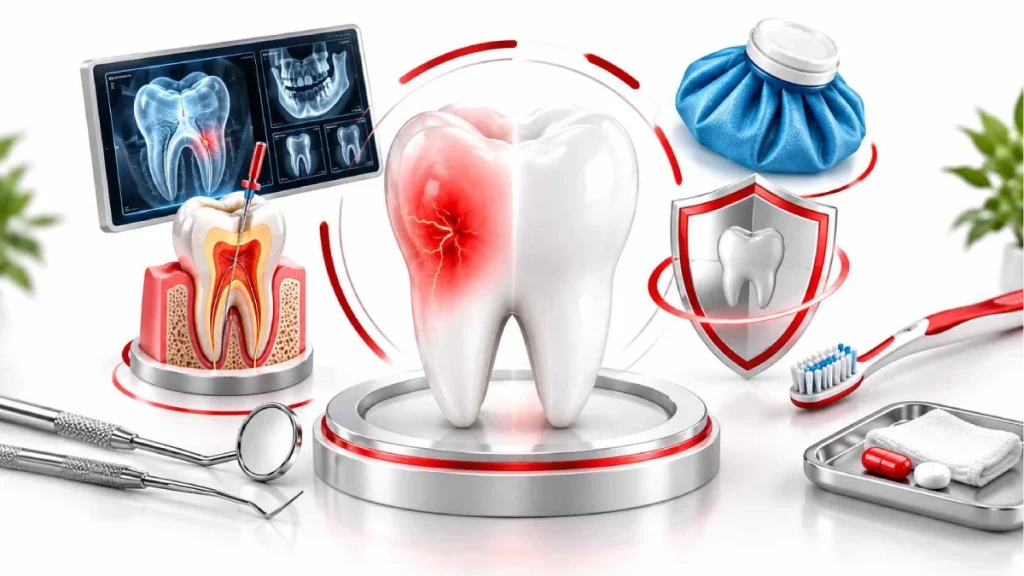
Ease tooth pain at home with a saltwater rinse, a cold compress, and a pain reliever. Rinse with half a teaspoon of salt in warm water. Hold ice on your cheek for 15 minutes. Take ibuprofen or acetaminophen as the label directs.
Avoid hot, cold, or hard foods, and sleep with your head raised. Never put aspirin on your gum, because it burns. These steps buy time, but only a dentist can fix the cause.
How to Prevent Dental Pain
Prevent most dental pain by brushing twice a day, flossing daily, and getting regular checkups. Use fluoride toothpaste and a soft brush. Limit sugary snacks and acidic drinks like soda. Don’t chew ice.
Wear a night guard if you grind. See your dentist every six months. Problems caught early need a filling, not a root canal.
Mistakes That Make Tooth Pain Worse
The biggest mistake is waiting for tooth pain to go away on its own. Here are the ones I see most often:
- Ignoring pain that stops. The nerve may have died, but the infection is still there.
- Putting aspirin on the gum. It burns the tissue and doesn’t help the tooth.
- Relying on antibiotics alone. The infection comes back if the tooth isn’t treated.
- Brushing harder on sore gums. It worsens recession and sensitivity.
- Chewing on the painful side. It can deepen a crack.
- Skipping visits out of fear. Small problems become root canals or extractions.
How Dentists Diagnose and Treat Dental Pain
Dentists diagnose dental pain with an exam, a few simple tests, and imaging, then treat the cause. The goal is always to save your natural tooth when it’s possible.
Finding the Cause
I start by listening to how the pain behaves. Where it hurts, what sets it off, and how long it lasts tell me a lot. Then I run a few quick tests:
- Cold test: shows whether the nerve is healthy or inflamed
- Bite test: finds cracks by checking each cusp
- Tap test: reveals infection at the root tip
- X-rays: show decay, bone loss, and old fillings
- CBCT 3D scan: shows hidden cracks, extra canals, and early infection
Together, these tests point to one tooth and one cause. That way, we never treat a tooth that isn’t the problem.
Treatment Options
Treatment depends on how deep the damage goes. The most common options are:
- Filling or crown: repairs decay or a crack before it reaches the nerve
- Root canal: removes inflamed or infected pulp and seals the tooth
- Root canal retreatment: fixes an old root canal that failed
- Waterlase laser: helps clean and disinfect the inside of the tooth
- Deep cleaning: treats gum disease below the gum line
- Night guard: protects teeth from grinding
- Extraction: the last option, when a tooth can’t be saved
Many patients fear root canals. With modern numbing, most say it feels like getting a filling. More important, it ends the pain instead of causing it.
Frequently Asked Questions
Can a toothache go away on its own?
Pain from irritated gums can fade in a day or two. Pain from decay, a crack, or an infection doesn’t go away without treatment, even if it stops for a while.
Why does tooth pain get worse at night?
Lying down sends more blood to your head, which adds pressure around a sore tooth. With fewer distractions at night, you also notice the pain more.
Can tooth pain spread to the ear, jaw, or head?
Yes, because the nerves in your face are closely connected. Pain from a back tooth can feel like an earache, jaw pain, or a headache, which is called referred pain.
What can I do for unbearable tooth pain?
Take an over-the-counter pain reliever as the label directs and hold a cold compress on your cheek. Call an emergency dentist the same day, or go to the ER if you have swelling, fever, or trouble breathing.
What can I drink to stop tooth pain?
No drink stops tooth pain, but room-temperature water won’t trigger it the way hot, cold, or sugary drinks can. A warm saltwater rinse, swished and spit out, can soothe sore gums.
How do I tell if tooth pain is serious?
Pain that lasts more than two days, wakes you at night, or lingers after hot or cold is serious. Swelling, fever, or a bump on the gum means infection and needs care the same day.
What is the 3-3-3 rule for toothache?
The 3-3-3 rule is a social media tip, usually described as taking three ibuprofen tablets, three times a day, for three days. That total can go beyond the daily limit on over-the-counter labels, so take it this way only if your dentist or doctor tells you to.
The Bottom Line
Dental pain is a warning sign, and most causes are easy to treat when caught early. Decay, infection, cracks, gum disease, and sensitivity each have their own pattern. Knowing that pattern helps you decide how fast to act.
Don’t wait for pain to fade, and don’t trust a toothache that suddenly stops. The sooner we find the cause, the better the chance of saving your natural tooth. In most cases, that means a simpler fix and a faster return to comfort.
If tooth pain is keeping you up at night, visit Tooth Savers in Boca Raton to schedule an exam with Dr. Glen Mitchell.