Root canal treatment is rarely the first thing our patients want to hear about, but it is often what saves the tooth. Most people who visit our office have already been living with the warning signs for weeks. There’s an ache that fades and then comes back, sensitivity to coffee or ice water that hangs …

Root canal treatment is rarely the first thing our patients want to hear about, but it is often what saves the tooth. Most people who visit our office have already been living with the warning signs for weeks. There’s an ache that fades and then comes back, sensitivity to coffee or ice water that hangs on after the sip, or a tender spot they’ve learned to chew around.
Many hoped it would settle down on its own. When the pulp inside a tooth is inflamed or infected, though, it rarely heals by itself, and waiting usually turns a straightforward appointment into an emergency.
Luckily, a tooth gives clear signals before an infection turns serious. When you catch these signs early, one routine visit can solve the problem. You can skip the stress of a last-minute emergency appointment.
What Is a Root Canal and Why Would You Need One?
A root canal is a treatment that removes infected or damaged pulp from inside a tooth. The pulp is the soft tissue that holds the nerves and blood vessels. Deep decay, a crack, or an injury can let bacteria reach it, and then the tooth becomes painful and infected. At our Boca Raton office, we remove the damaged pulp, clean the canals, and seal the tooth with gutta-percha to block new infection. The goal is to relieve your pain while saving your natural tooth with root canal treatment instead of pulling it.
You need one when the pulp is infected or dying and can’t heal on its own. Without treatment, the infection can spread into the bone and cause an abscess, and you may lose the tooth. Common causes include a deep cavity, a cracked tooth, a sports injury, or several fillings on the same tooth.
Most patients say treatment feels like getting a filling. A study of 1.4 million teeth found 97% were still in place 8 years later .
7 Warning Signs You May Need a Root Canal
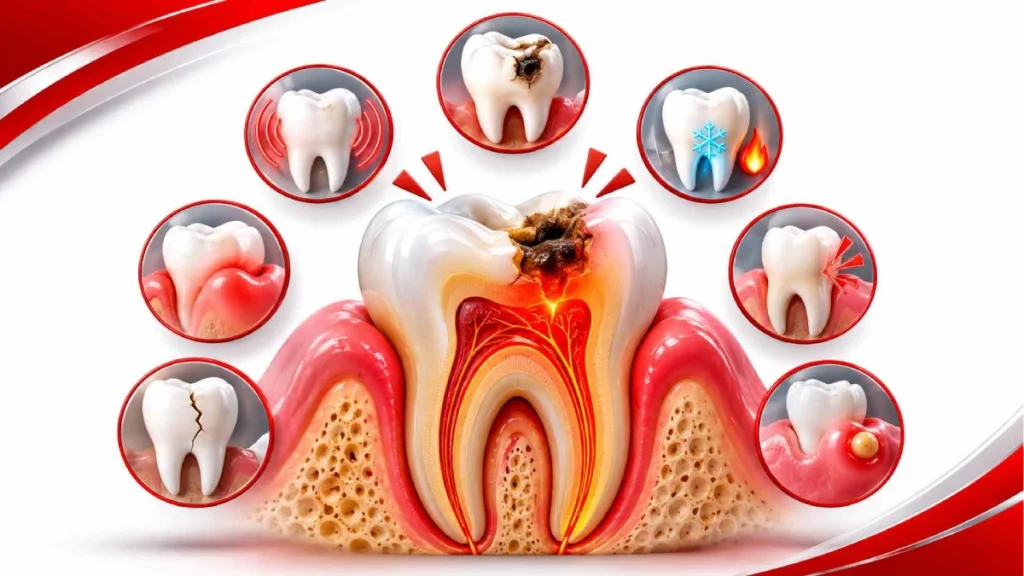
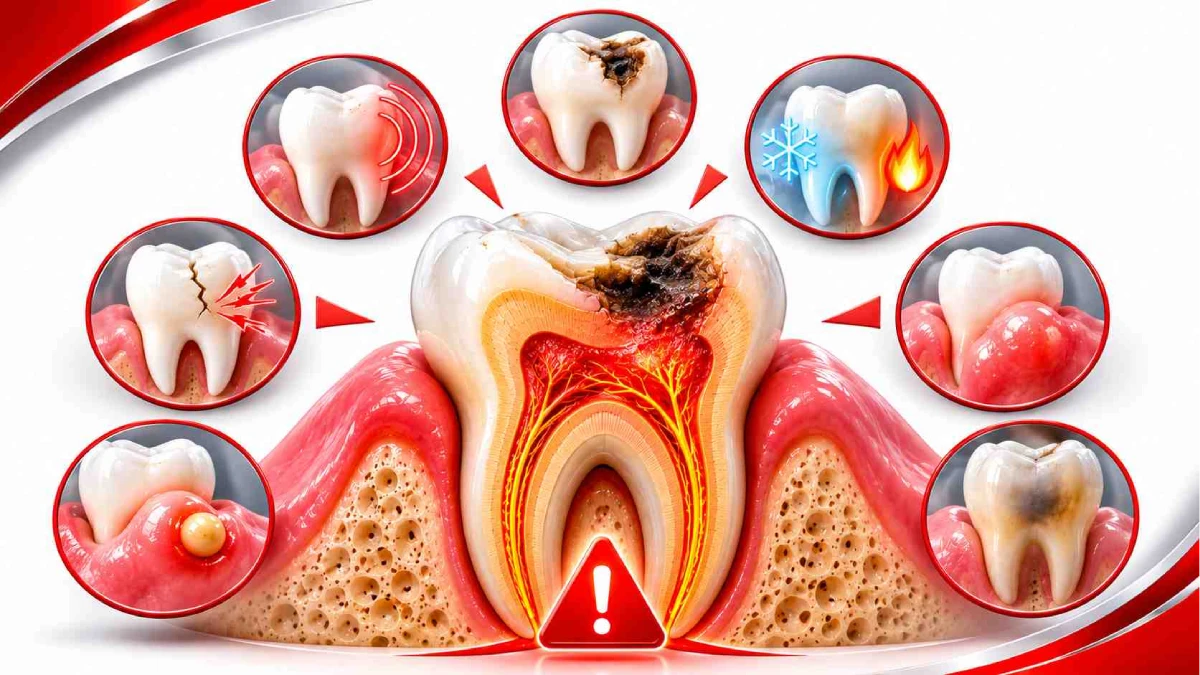
The 7 most common signs are lasting pain, lingering sensitivity, pain when chewing, swollen gums, a gum bump, a darkening tooth, and pain that suddenly stops. One sign alone doesn’t confirm an infection. If you notice 2 or more, have the tooth checked.
Here are the seven warning signs our team checks for most often, plus what each one could mean and when to come in.
1. Tooth Pain That Keeps Coming Back
Pain that keeps returning to the same tooth is one of the clearest signs of a pulp problem. A brief twinge now and then doesn’t mean you need a root canal. Pain that keeps coming back, gets stronger, or disturbs your sleep or meals needs a closer look.
We check for pulp damage when the pain seems to come from inside the tooth. It may feel dull and throbbing, sharp and sudden, or like deep pressure. Sometimes it stays in one spot. Other times it seems to spread to the jaw, ear, or nearby teeth.
Pain that gets worse over time needs prompt care. Pain relievers such as ibuprofen may ease the ache for a few hours, but they don’t treat the infection.If the pain keeps coming back for more than 2 to 3 days, book an exam with our Boca Raton team.
2. Hot or Cold Sensitivity That Lingers
Sensitivity that lasts more than 30 seconds after the hot or cold is gone is a warning sign. A quick zing from ice cream that fades in a few seconds is often minor. The concern grows when the ache is sharp or stays long after your coffee or ice water.
This lingering pain can mean the pulp inside the tooth is irritated or damaged. The pulp holds the tooth’s nerves and blood vessels. When it becomes inflamed, it reacts strongly to temperature changes, such as a hot soup or a cold drink.
If sensitivity starts lasting longer or hurting more, have the tooth checked. Sensitivity toothpastes such as Sensodyne won’t fix a damaged pulp. In our office, a quick cold test shows how the pulp responds and helps us decide whether treatment is needed.
3. Pain When You Bite or Chew
Sharp pain when you bite down can mean infection at the root tip or a crack in the tooth. A healthy tooth handles normal chewing without pain. If one tooth hurts each time you bite on hard foods such as nuts, popcorn, or crusty bread, something may be wrong inside it or around its root.
Pain from biting pressure has several possible causes, so the right diagnosis matters. Infection can inflame the ligament that holds the tooth in place. Hidden cracks, deep decay, and old fillings that have failed can cause the same pain when you chew.
At our Boca Raton office, we use digital X-rays and a 3D CBCT scan to find the source. A CBCT scan shows the tooth, its roots, and the bone around it in three dimensions. It can find cracks and infections that a regular X-ray may miss.
4. Swollen or Tender Gums Near One Tooth
Swelling or tenderness around one tooth can mean infection is spreading from the root. The gum may look red and puffy, or it may feel sore and raised when you touch it. Swelling that comes with tooth pain should never be ignored.
An infection that starts inside the tooth can move into the gums and bone around it. Treating the source of the infection is the key. Root canal treatment removes the infected pulp, clears the infection, and saves your natural tooth.
Facial swelling needs care the same day, especially if it spreads to the cheek, jaw, or neck. Our Boca Raton office offers emergency appointments for urgent pain and infection. If the swelling comes with a fever or trouble swallowing, go to the nearest ER right away.
5. A Pimple-Like Bump on Your Gum
A small bump on the gum near one tooth is often a draining abscess, called a sinus tract. It may leak pus and leave a bad taste in your mouth. Even if it looks minor, a bump that keeps coming back is a reason to book an exam.
Dental infections can change over time. The bump may shrink, and the pain may fade, because the pus has found a way out. However, the infection is still active inside the tooth and won’t heal on its own.
Before recommending treatment, we review your symptoms, dental history, exam findings, and X-rays or CBCT images. If the infection is inside the tooth, root canal treatment removes the source. Once the source is gone, the bump can heal and you keep your natural tooth.
6. A Tooth That Turns Dark or Grey
A tooth that turns grey, brown, or dark yellow may have a dying or dead pulp. Have it checked if it looks darker than the teeth beside it, especially after pain or sensitivity. The change often follows trauma, such as a fall or a blow to the mouth.
The color change can show up weeks or even months after the injury. As the pulp breaks down, blood pigments stain the dentin from the inside. Because the stain starts inside the tooth, whitening strips or gels won’t fix it.
At our Boca Raton office, we treat injured teeth and other pulp problems that threaten a natural tooth. Root canal treatment removes the damaged pulp and stops the problem from spreading. Afterward, internal bleaching or a crown can bring back a natural shade.
7. Pain That Suddenly Stops (or No Pain at All)
Pain that stops on its own can mean the nerve has died, not that the problem is fixed. A tooth that stops hurting can feel like good news. However, the infection can keep spreading into the bone without causing any pain.
Silent infections are more common than most people think. Many of our patients are surprised when an X-ray shows an abscess they never felt. Signs like a gum bump, a bad taste, or a darkening tooth may be the only clues.
Don’t wait for the pain to come back before booking an exam. An endodontic exam shows whether the tooth needs treatment and whether we can save it. Finding the problem early gives you more options and a better chance of keeping your natural tooth.
Is It a Root Canal Problem or Something Else?
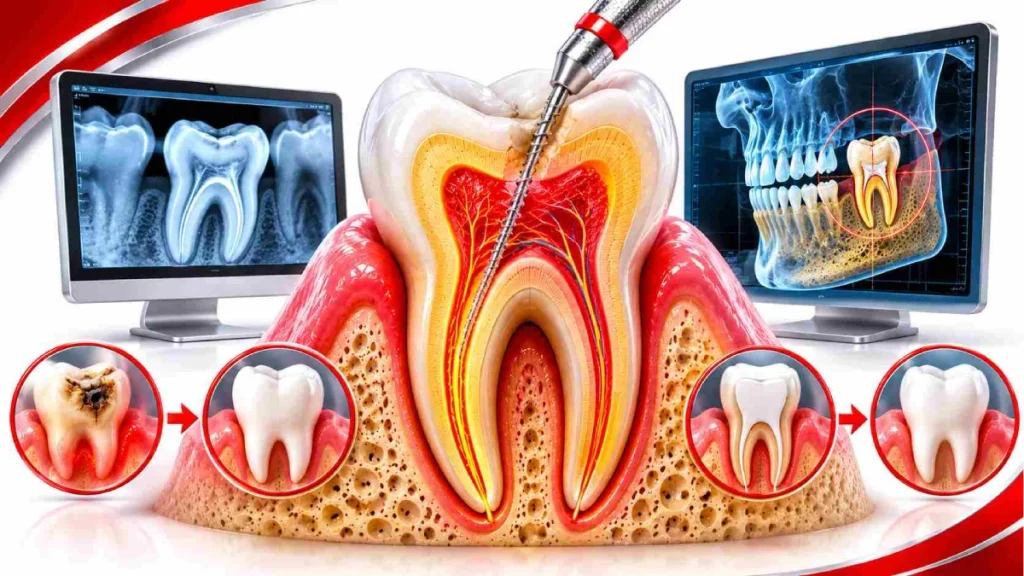
Not every toothache means you need a root canal. Sensitive teeth, gum disease, sinus infections, and teeth grinding can all feel like a pulp infection. Signs that point to the pulp include pain in 1 tooth, sensitivity that lasts more than 30 seconds, and pain that wakes you at night.
To find the real cause, we use simple tests such as a cold test, a tap test, and a bite test. Next, we take digital X-rays or a 3D CBCT scan to check the roots and bone. If you aren’t sure what’s causing your pain, book an exam at our Boca Raton office.
When to See a Dentist (and When It’s an Emergency)
See a dentist within a few days for ongoing tooth pain, and get emergency care right away for swelling, fever, or trouble breathing. Tooth infections don’t heal on their own.The sooner we see the tooth, the better the chance of saving it.
Call Your Dentist Within a Few Days
Book an exam if tooth pain or sensitivity lasts more than 2 to 3 days. Watch for warning signs such as pain when biting, a bump on the gum, or a tooth turning dark. Treating the tooth early often means a simpler visit.
Get Emergency Care Right Away
Get same-day care if you have facial swelling, fever, or trouble swallowing or breathing. These signs can mean the infection is spreading to the jaw or neck. Americans make about 2 million ER visits each year for dental problems, but an ER can’t save the tooth
What to Do Until Your Appointment
Take a pain reliever such as ibuprofen, rinse with warm salt water, and chew on the other side. Don’t put aspirin on your gums or use heat on swelling. Antibiotics may calm the infection for a while, but you’ll still need a root canal to remove its source.
How Does a Dentist Confirm You Need a Root Canal?
A dentist confirms you need a root canal by testing how the pulp responds and checking the root on X-rays. At our Boca Raton office, we use a cold test, a tap test, and a bite test to check the nerve and the tissue around the root.
Next, we take digital X-rays and, when needed, a 3D CBCT scan of the roots and bone. One study found CBCT detected 34% more root infections in upper back teeth than standard X-rays .
What Happens If You Wait Too Long?
If you wait too long, the infection can spread into the bone and cause a painful abscess. The tooth can weaken to the point where we can’t save it and it must be pulled. Replacing it with an implant or a bridge costs more and takes months.
In rare cases, the infection can spread to the jaw, neck, or bloodstream. A U.S. study found more than 61,000 hospital stays for tooth abscesses over 9 years . A root canal done early stops the infection and keeps your natural tooth.
Don’t Wait: Get Your Tooth Checked Early
The best time to treat an infected tooth is before the pain gets worse. Lingering sensitivity, pain when chewing, a gum bump, or a darkening tooth are all signs to book an exam. Catching the problem early often means a shorter visit and a better chance of saving your tooth.
At our Boca Raton office, we use gentle techniques, digital X-rays, and 3D CBCT scans to find the cause of your pain. Whether you need a root canal or a simpler fix, we’ll explain your options clearly before any treatment begins.
Don’t wait. Call (561) 368-3636 today. At Toothsavers, we will help you protect your natural tooth.
FAQs
When is it too late to avoid a root canal?
It’s too late once the pulp is permanently inflamed or has died, because a filling can no longer save the tooth. Warning signs include pain that lingers after hot or cold, throbbing at night, or a gum abscess.
What is the new procedure instead of a root canal?
If damage is caught early, vital pulp therapy (a pulp cap or pulpotomy) can save the healthy part of the pulp. Once the pulp is infected or dead, a root canal or extraction is still the only option.
What does the pain feel like if you need a root canal?
It’s usually a deep, throbbing pain that lingers after hot or cold, gets worse when you bite, or wakes you at night. Sometimes there’s no pain at all, because the nerve has already died.
Does a root canal hurt?
Thanks to local anesthesia, most patients say it feels like getting a filling. Mild soreness for a few days afterward is normal.
Will antibiotics fix an infected tooth?
No, antibiotics can reduce swelling, but they can’t remove the infection inside the tooth, so it will come back without treatment.
How much does a root canal cost?
In the US, expect about $700 to $1,600, depending on the tooth, with molars costing the most. A crown adds roughly $1,000 to $1,700, and insurance often covers part of the total.
Can a root canal tooth get infected again?
Yes, though it’s uncommon. It can happen through new decay, a crack, or a damaged crown, and retreatment can often still save the tooth.