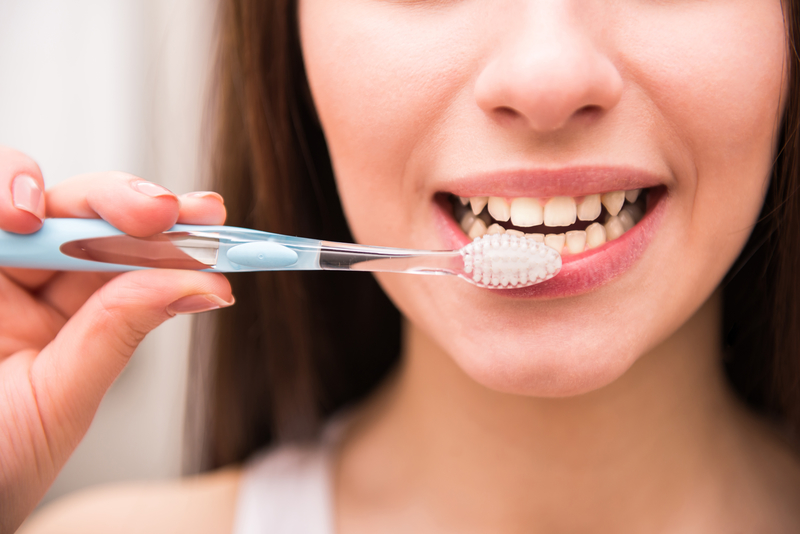
Toothbrush care is easy to overlook, even for people who brush twice a day. Every time you brush, saliva, food debris, toothpaste, and bacteria from your mouth cling to the bristles, and a quick rinse doesn’t remove all of them. Most of these germs are harmless and already live in your mouth, but some can …

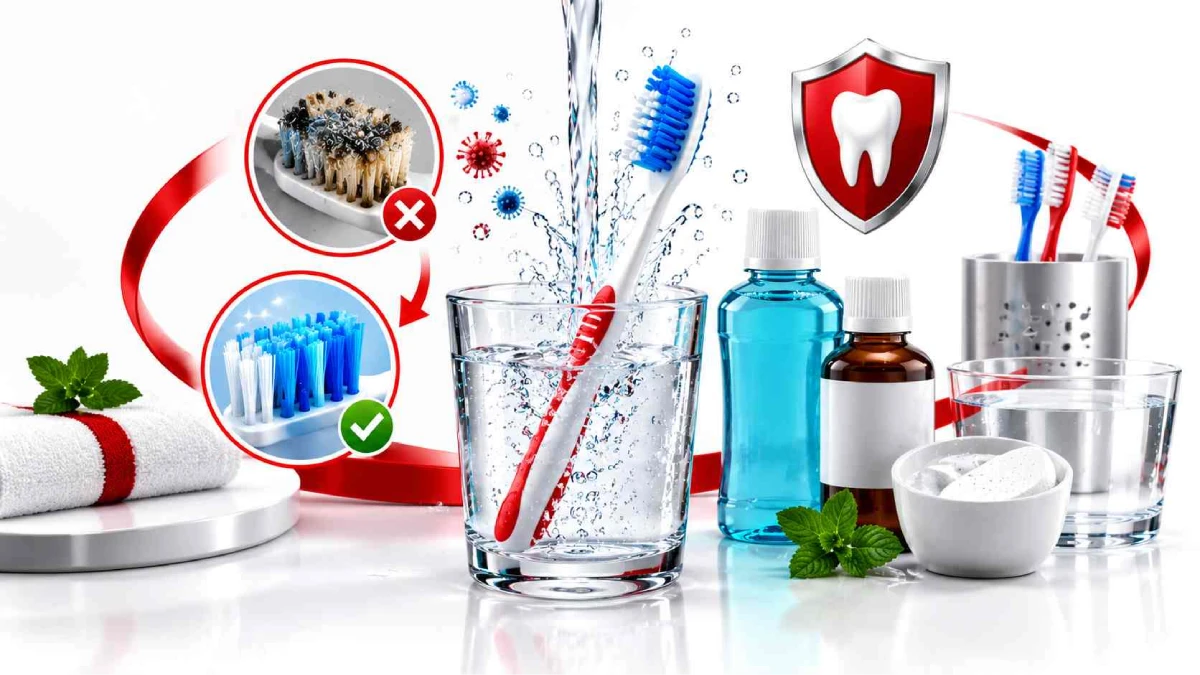
Toothbrush care is easy to overlook, even for people who brush twice a day. Every time you brush, saliva, food debris, toothpaste, and bacteria from your mouth cling to the bristles, and a quick rinse doesn’t remove all of them. Most of these germs are harmless and already live in your mouth, but some can cause illness, and a damp, dirty brush gives them room to grow.
The good news is that keeping your toothbrush clean doesn’t require special gadgets or complicated routines. People try everything from dishwashers and boiling water to mouthwash soaks and UV sanitizers, but many of these methods are unnecessary, and some can even damage the brush.
How Often Should You Change Your Toothbrush?
Cleaning can’t make an old toothbrush work like new. Replacing your toothbrush or brush head every three to four months, or sooner if the bristles are frayed. Worn bristles don’t clean teeth and gums as well.
Replace your Toothbrush early if you notice frayed bristles, discoloration, or buildup at the base. It’s also smart to switch to a new one after a cold, the flu, or a mouth infection.
While you’re sick, store your toothbrush away from others so the brushes don’t touch and pass germs between them.
Why a Clean Toothbrush Is Important
Keeping your toothbrush clean is one of the simplest habits for better oral hygiene. Each time you brush, the bristles pick up food particles, toothpaste, and bacteria from your mouth. That’s normal, but a brush left damp and dirty gives germs a chance to multiply. A quick rinse, proper drying, and the occasional deep clean help keep that buildup under control, especially when someone in your home is sick.
How to Keep Your Electric Toothbrush Clean
You can clean an electric toothbrush head the same way as a manual brush. Take the head off the handle first, rinse it under hot running water, and let it air dry before putting it back.
Toothpaste and water can also collect where the head meets the handle, so rinse that area and wipe the handle with a damp cloth every few days. Unplug the charging base before wiping it, and never put it in water.
Replace the Toothbrush head every three to four months, or sooner if the bristles look worn or the color indicator has faded.
Is Your Toothbrush Full of Bacteria?
Yes, your toothbrush holds bacteria after every use, and that is normal. Most were types your mouth already knows, like Streptococcus, along with gut-related germs such as E. coli.
Each time you brush, the bristles pick up saliva, food bits like rice, and leftover toothpaste. However, more germs on the brush does not mean you will get sick. The American Dental Association found no proof that everyday toothbrush bacteria harm your oral health.
Still, a few patients should take extra care with their brush:
- Anyone recovering from illnesses like the flu, a cold, or strep throat
- Patients with gum problems such as gingivitis or periodontitis
- People with weak immune systems, for example during chemotherapy
How to Clean Your Toothbrush After Every Use
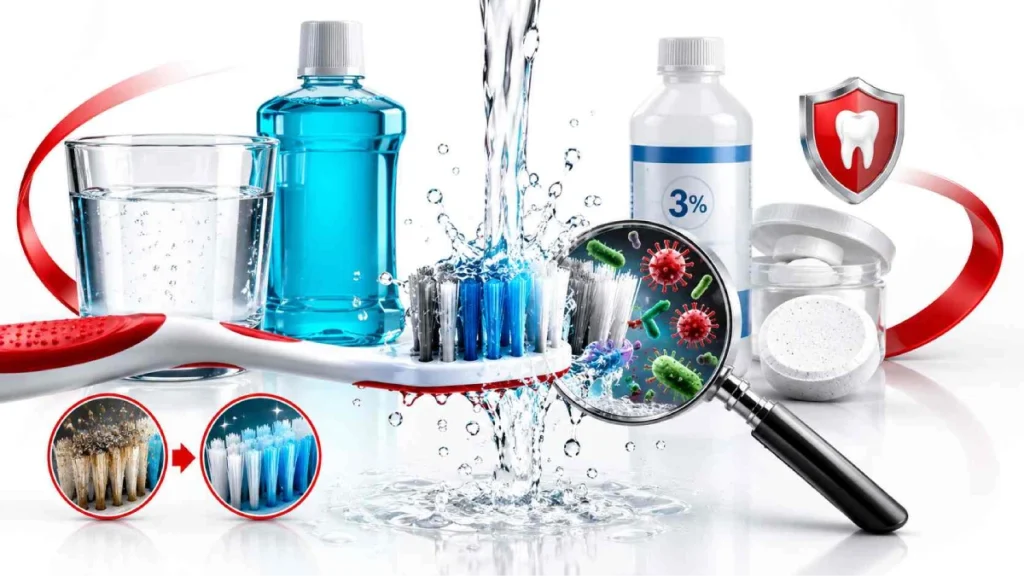
Rinse your toothbrush under hot running water, rub out the debris, and let it air dry upright. This routine takes less than 60 seconds. You don’t need extra products like sprays, tablets, or special cleaners for this daily step.
Follow these 5 steps each time you brush:
- Wash your hands with soap and water for 20 seconds first.
- Rinse the bristles under hot tap water for 10 to 15 seconds.
- Rub your thumb across the bristles to push out bits like toothpaste and food.
- Tap the handle 2 or 3 times on the sink edge to shake off water.
- Stand it upright in an open holder with the bristles facing up.
Give the brush a quick rinse before you use it, too. When you flush, tiny toilet droplets stay in the air for up to 2 hours and settle on nearby surfaces. That is why drying matters as well, since germs like mold and yeast grow on damp bristles. In addition, if you brush 3 times a day, keep 2 Toothbrushes so each one dries fully between uses.
How to Disinfect Your Toothbrush
You can disinfect your toothbrush once a week by soaking the bristles in a safe solution. Common options include mouthwash, 3% hydrogen peroxide, and denture tablets. Each one takes between 30 seconds and 30 minutes.
For most healthy people, a deep clean is optional, since daily rinsing and drying do most of the work. A weekly soak helps most after illnesses like the flu, a cold, or strep throat. Use fresh solution each time, soak only the bristles, and rinse the brush with tap water afterward.
Soak It in Antibacterial Mouthwash
Swish the bristles in antibacterial mouthwash for 30 seconds, or soak them for 2 to 3 minutes. Pick a mouthwash with germ-fighting ingredients like Acetyl pyridinium chloride or chlorhexidine. Pour just enough into a small cup to cover the bristles.
Mouthwash kills significantly more germs than hot water alone. The trade-off is wear, because the bristles soften and fray sooner. Rinse the brush and stand it upright to dry.
Use 3% Hydrogen Peroxide
Soak the bristles in 3% hydrogen peroxide for 5 to 10 minutes, then rinse well. Use the brown bottle sold in pharmacies, not the stronger salon or cleaning grades. Fill a clean cup so the liquid covers the bristle tips.
Studies show this solution helps kill bacteria left on the bristles. Never swallow peroxide, and pour out the used liquid after each soak. Mix a fresh batch every time you clean.
Try a Denture Cleaner Tablet
Drop 1 denture tablet into a cup of water and soak the bristles for the time on the package. Brands like Polident and Efferdent work for this. They are made to clean dentures, but they work on Toothbrushes as well.
These tablets contain citric acid and sodium bicarbonate, which loosen food stuck between bristles. Their enzymes help break down food proteins left behind. Rinse the brush well so no residue stays on it.
Use White Vinegar or Baking Soda
Soak the bristles in white vinegar for 30 minutes, or swish them in baking soda water. For baking soda, mix 2 teaspoons into 1 cup of water. Both items cost little and sit in most kitchens.
The research behind these two is weaker than for mouthwash or peroxide. Vinegar leaves a sour taste, so rinse the Toothbrush for 15 to 20 seconds afterward. Keep these soaks to once a week at most.
Are UV Toothbrush Sanitizers Worth It?
A UV sanitizer can lower germs, but most healthy people do not need one. These small cases shine ultraviolet-C light on the brush head for a few minutes. One study found UV cleaned Toothbrushes better than salt water or chlorhexidine mouthwash.
Some UV units may also wear down the bristles over time. If you have a weak immune system, choose a device cleared by the FDA.
Cleaning Methods to Avoid
Avoid boiling water, the dishwasher, the microwave, and bleach for cleaning your Toothbrush. Heat bends the nylon bristles and can warp the plastic handle. Harsh cleaners like bleach leave a residue that ends up in your mouth.
- Boiling water: bends bristles and weakens the handle
- Dishwasher: high heat and strong detergents damage the brush
- Microwave: can melt or crack the plastic
- Bleach or household sprays: leave harmful chemicals on the bristles
- Daily chemical soaks: wear out bristles in weeks instead of months
How to Store Your Toothbrush Safely
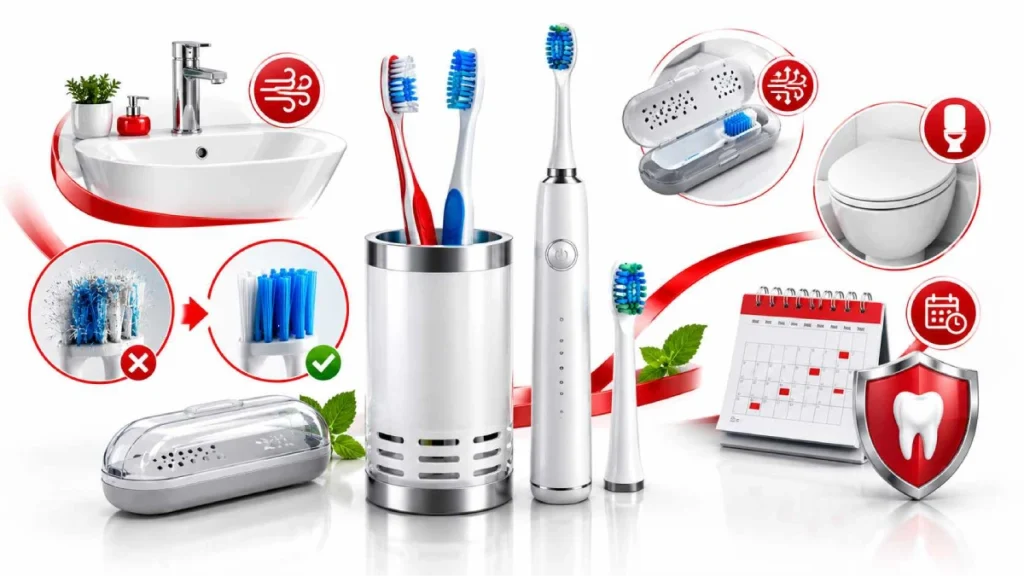
Keep your toothbrush standing upright in an open holder, placed at least 3 feet away from the toilet. The bristles need fresh air to dry between uses. Closed spaces like drawers, cabinets, and covered cases trap moisture instead. Each flush also sends tiny droplets into the air, and they can linger for up to 2 hours.
- Stand it upright with the bristles facing up.
- Keep brushes 2 to 3 inches apart so heads never touch.
- Close the toilet lid before flushing.
- Keep the holder away from the faucet to avoid splashes.
- Wash the holder weekly with hot, soapy water.
- Dry the brush before travel and use a vented cap.
- Never share a toothbrush, even with family.
When to Replace Your Toothbrush
Replace your toothbrush or electric brush head every 3 to 4 months, or sooner if the bristles fray. This is the American Dental Association’s standard advice. Worn bristles miss plaque along the gumline and between teeth.
Bacteria on a Toothbrush also change the longer you use it. A 2020 German study found that highest bacterial levels were found on toothbrushes used for more than 12 weeks. Children often wear out their brushes faster, so check theirs more often.
Replace it sooner if you notice:
- Frayed or splayed bristles that bend outward
- Stains or crusty buildup near the base
- Black spots, which can be mold
- A bad smell that stays after rinsing
- A drop on the bathroom floor or near the toilet
- A recent illness, like the flu, a cold, or strep throat
Toothbrush Care for Patients With Dental Concerns
Patients with gum disease, recent dental work, braces, or low immunity need extra brush care. Use a soft-bristled Toothbrush in all these cases. Replace it on time, and rinse it well after each use.
For a mouth infection, such as a fungal, yeast, or viral infection, change your brush twice: once at the start of treatment and again at the end. However, ask your dentist before adding strong soaks like chlorhexidine. Bring your brush to your next checkup so your dentist can see how it wears.
- Gum disease (gingivitis or periodontitis): rinse well, and add a weekly mouthwash soak.
- After surgery (extraction, implant, or root canal): start with a new soft brush.
- Braces or aligners: rinse longer and check bristles every month.
- Low immunity (chemotherapy or diabetes): ask about weekly soaks or a UV sanitizer.
- Children: help them rinse and store the brush upright.
Keep Your Smile Healthy With Regular Dental Visits
A clean toothbrush supports your oral health, but it cannot replace professional dental care. Rinsing, drying, and replacing your brush on time keep germs in check at home. Regular checkups catch problems like cavities, cracks, and infections before they cause pain.
If tooth pain is keeping you up at night, don’t wait for it to pass. Visit Tooth Savers in Boca Raton to schedule an exam with Dr. Glen Mitchell. You can also bring your toothbrush questions to that visit and get advice that fits your mouth.
FAQs
What is the most sanitary way to keep a toothbrush?
Rinse it well after each use and store it upright in an open holder so it can air dry completely. Keep it away from other toothbrushes and as far from the toilet as possible.
Does hydrogen peroxide really disinfect a toothbrush?
Yes, soaking the bristles in 3% hydrogen peroxide can help reduce bacteria on your toothbrush. Rinse it thoroughly with water afterward, and don’t soak it too often, as this can wear out the bristles.
Can I soak my toothbrush in vinegar?
You can, and white vinegar may help reduce some bacteria, but the evidence is limited. Rinse the brush well afterward to remove the taste and any leftover acid.
Can I use Dawn dish soap to clean my toothbrush?
It’s not recommended, because dish soap isn’t made for oral use and can leave a residue on the bristles. Hot running water is enough for daily cleaning, so save dish soap for your toothbrush holder instead.
Is it bad to cover my toothbrush?
Covering a wet toothbrush traps moisture, which helps bacteria and mold grow. If you need a cover for travel, let the brush air dry first and choose a vented cap.