
Endodontist · Deerfield Beach, FL
Board-Certified Endodontist Serving Deerfield Beach, FL
Root canals are all Dr. Mitchell does: every day, for more than 30 years.
Dr. Glen B. Mitchell, DDS, Diplomate of the American Board of Endodontics · Updated: November 15, 2026
Dr. Glen B. Mitchell is a board-certified endodontist (a root canal specialist) who treats patients from Deerfield Beach at his office at 900 Glades Road in Boca Raton. From the Hillsboro Boulevard exit, it’s three exits north on I-95, about 10 to 20 minutes on a weekday morning. He handles root canals, retreatment of old root canals, cracked teeth, endodontic microsurgery and dental emergencies, using 3D cone beam CT imaging and Waterlase laser disinfection. If you’re in pain, call on a weekday and we’ll do our best to see you that same day.
Diplomate
American Board of Endodontics. Verify it in the AAE “Find an Endodontist” directory.
30+ years
Practicing endodontics in Manhattan, Long Island and now Boca Raton.
25 vs. <2
Root canals per week: endodontists vs. general dentists (AAE).
Same day
Weekday visits held for patients in pain. Reports go to your dentist the same day.
Why the short drive
Why Deerfield Beach Patients Drive Up to See Dr. Mitchell
Deerfield Beach has dentists on nearly every block of Hillsboro Boulevard, and many do root canals. Most of our Deerfield patients make the short drive up I-95 for four reasons: board certification, a practice limited to endodontics for more than 30 years, 3D imaging in the office, and weekday time held for patients in pain.
1. He's board certified, which few endodontists are.
Every endodontist finishes dental school plus at least two years of specialty training. Board certification by the American Board of Endodontics is an extra step on top of that: written, case-based and oral exams that relatively few endodontists complete. Dr. Mitchell is a Diplomate of the Board, and you can verify it on the American Association of Endodontists’ “Find an Endodontist” directory.
2. This is all he does.
According to the AAE, endodontists perform about 25 root canal treatments a week; general dentists perform fewer than two. Dr. Mitchell has done this work for more than 30 years. His training:
- DDS, Northwestern University
- General practice residency at the VA and University of Michigan hospitals
- Oral surgery fellowship, University of Michigan
- Certificate in Endodontics, Columbia University
The oral surgery background matters most when a case needs microsurgery, or when we’re deciding whether a tooth is worth saving at all.
3. He can see what an ordinary X-ray can't.
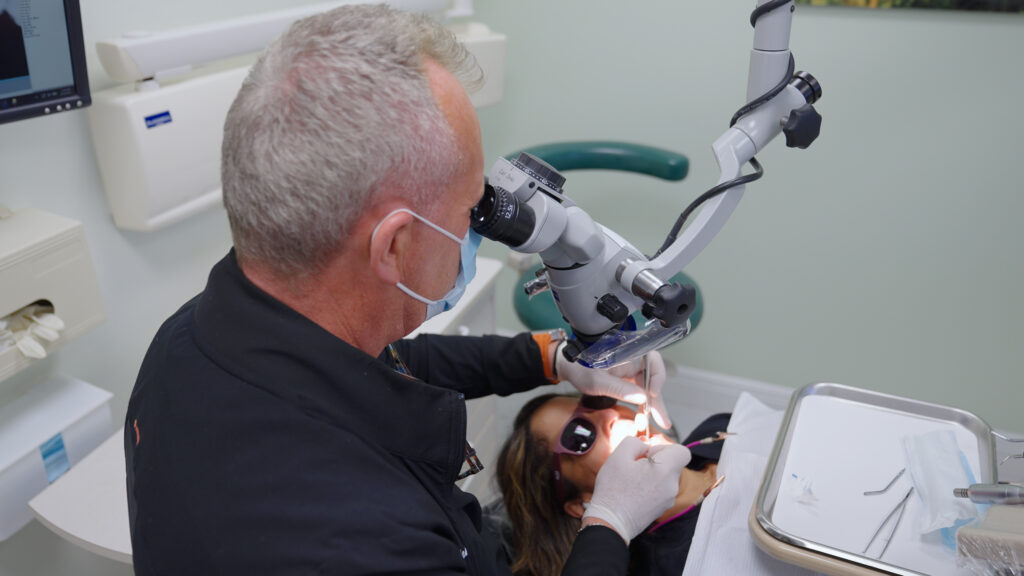
A regular dental X-ray is a flat picture of a three-dimensional tooth. Our in-office CBCT (cone beam CT) scanner shows the tooth in 3D: extra canals, hidden cracks, and infection at the root tip that a flat image can miss. We also use Waterlase laser technology to help disinfect the canal system. Treatment is done under a dental operating microscope, which magnifies and lights the inside of the tooth.
4. You can get in quickly when it hurts.
Tooth pain doesn’t wait for your next six-month cleaning. We hold time on weekdays for patients in pain, and we send a full report and images to your Deerfield dentist the same day, so your dentist knows exactly what was done.
Inside Our Boca Raton Office
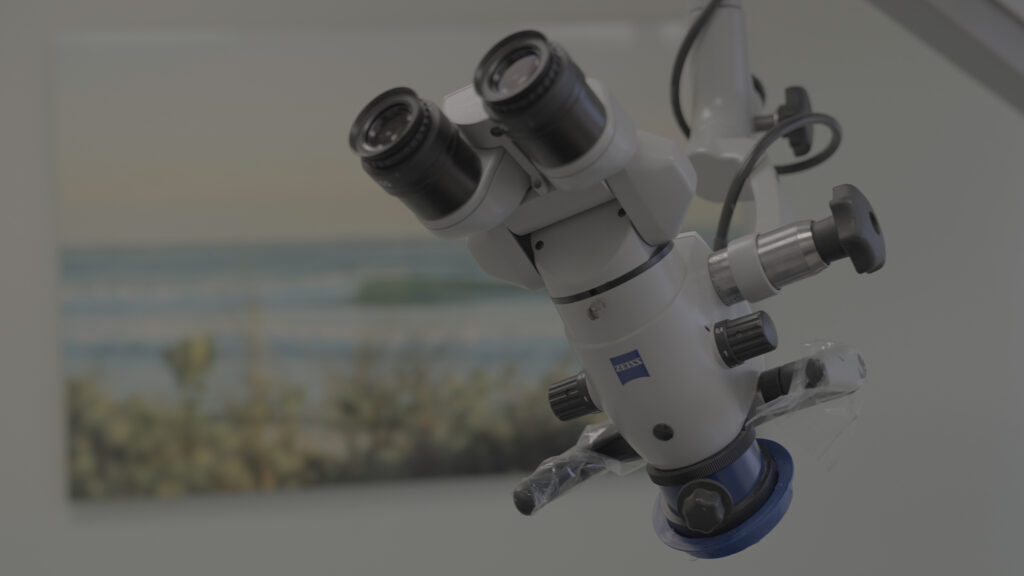
Operating microscope
Magnification and bright light help Dr. Mitchell find small extra canals and fine cracks.
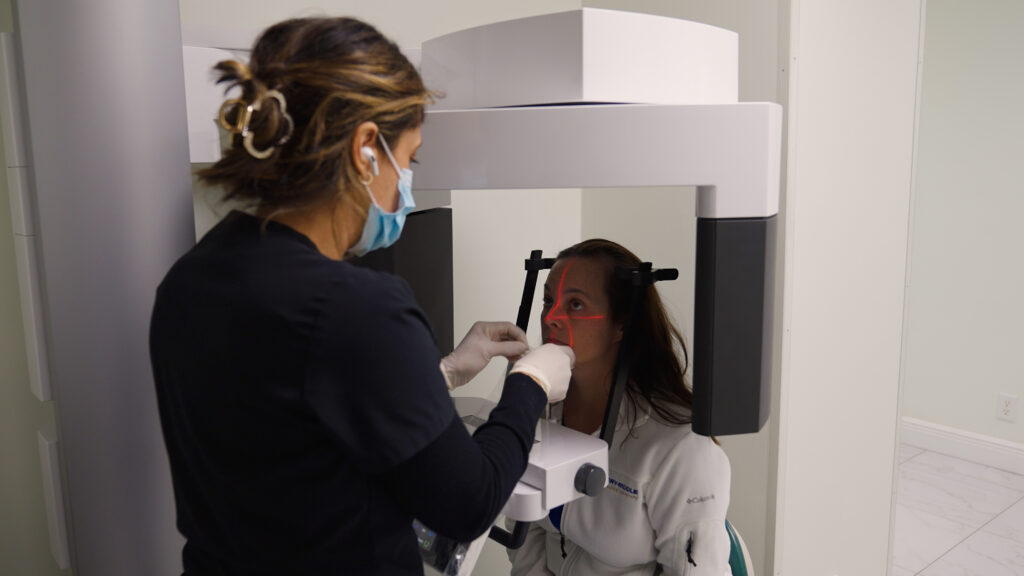
3D cone beam CT
A 3D scan of the tooth and surrounding bone, taken in our office when a regular X-ray isn’t enough.
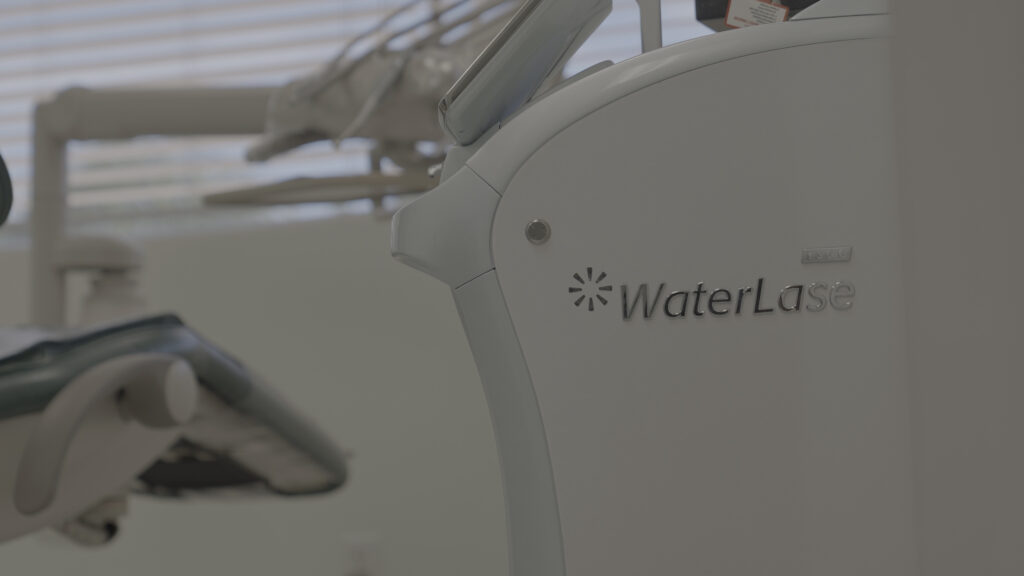
Waterlase laser
Laser energy and water spray help disinfect the canal system during treatment.
Diagnosis first
Do You Really Need a Root Canal?
You may need a root canal if you have lingering pain with hot or cold, throbbing that wakes you at night, pain when biting, or a pimple on the gum. Many people ask after another office has already said yes. A specialist exam with testing and 3D imaging settles it either way, and sometimes the answer is no.
Signs your tooth may need a root canal
- Lingering sensitivity to hot or cold. A twinge that fades in a second or two is usually fine. Pain that hangs on for 30 seconds or more after the coffee or ice water is gone is not.
- Throbbing or spontaneous pain, especially pain that wakes you up at night.
- Pain when you bite or chew, or a tooth that feels “high.”
- A swollen gum, or a small pimple on the gum near one tooth that may drain a bad taste. This is often a sign of an abscess.
- A tooth that has turned darker after an old injury.
- No symptoms at all. Sometimes an infection shows up only on an X-ray or CBCT. That’s why a “quiet” tooth can still need treatment.
How Dr. Mitchell confirms the diagnosis
Before recommending anything, he tests the tooth and the teeth next to it:
- Cold test: shows whether the nerve is healthy, inflamed or no longer alive.
- Percussion and bite tests: gentle tapping and biting to find which tooth hurts and why.
- Palpation: pressing the gum over the root tip to check for inflammation.
- Digital X-rays and a 3D CBCT scan: to see the canals, the bone and any infection.
When you might not need a root canal
Not every painful tooth needs one. If the nerve is irritated but still healthy, called reversible pulpitis, the right answer may be a new filling and time. A cracked tooth with a healthy nerve may only need a crown. And some teeth are too badly broken or cracked to save. In that case Dr. Mitchell will tell you so, and explain why extraction makes more sense.
Told you need a root canal and not sure? We’re happy to give you a second opinion. Ask about consultation fees when you call.
Compare your options
Endodontist, General Dentist, or Pulling the Tooth?
For a tooth that can be saved, a board-certified endodontist brings the most training and experience with root canals; a general dentist suits simple single-canal teeth; extraction and an implant are for teeth that truly can’t be saved. The table compares training, caseload, imaging and timeline, using American Association of Endodontists data.
| Board-certified endodontist | General dentist | Extraction + implant | |
|---|---|---|---|
| Training after dental school | At least 2 years of endodontic specialty training, plus board certification | Usually none in endodontics | Oral surgeon or implant dentist, for the implant |
| Root canals performed | About 25 per week (AAE) | Fewer than 2 per week (AAE) | — |
| 3D CBCT imaging | Yes, in our office | Varies | Usually needed for implant planning |
| Best for | Molars, curved or calcified canals, retreatments, cracked teeth, surgery | Simple single-canal teeth | Teeth that truly can’t be saved |
| What you keep | Your natural tooth | Your natural tooth | An artificial replacement |
| Typical timeline | Usually 1–2 visits, then a crown from your dentist | Varies | Several months from extraction to final crown |
When is pulling the tooth the better choice? When the root is fractured vertically, there isn’t enough healthy tooth left to restore, or gum disease has destroyed the bone around it. Otherwise, a natural tooth that has been treated and properly crowned can last for decades. You won’t need an implant if your own tooth can be kept.
Treatments
Root Canal Treatments for Deerfield Beach Patients
We treat only the inside of the tooth: first-time root canals, retreatment of older root canals, endodontic microsurgery (apicoectomy), cracked-tooth diagnosis, emergency care for tooth pain and 3D CBCT-guided diagnosis. Each card below links to a full page explaining the treatment, who it is for and what recovery is usually like.
Root canal treatment
We remove infected or inflamed tissue from inside the tooth, clean and disinfect the canals, and seal them.
Root canal retreatment
For a tooth treated years ago that hurts again or shows new infection. We remove the old filling material, find canals that may have been missed and reseal the tooth.
Endodontic microsurgery (apicoectomy)
When retreatment isn’t the right option, the infection can be removed at the root tip through a small opening in the gum. Dr. Mitchell’s oral surgery fellowship is especially relevant here.
Cracked tooth diagnosis
CBCT helps show how deep a crack runs and whether the tooth can be saved.
Emergency root canal
Same-day weekday visits for severe pain, swelling or a broken tooth.
3D CBCT and Waterlase
In-office technology for more accurate diagnosis and thorough disinfection of the canal system.
Cost & insurance
What a Root Canal Costs and How Insurance Works
A root canal’s cost depends on which tooth it is, whether it’s a first treatment or a retreatment, and your dental insurance. Molars cost more than front teeth. Original Medicare doesn’t cover routine dental care (Medicare.gov), but many Medicare Advantage plans do. We give you a written estimate before treatment begins.
What affects the fee
- Which tooth. Front teeth usually have one canal, premolars one or two, and molars three or more. More canals means more time and a higher fee.
- First-time treatment or retreatment. Retreating an old root canal takes longer than treating a tooth for the first time.
- How complicated the tooth is. Curved, narrow or calcified canals take more time.
You receive a cost estimate before treatment begins.
Remember the crown
Your total cost is the root canal plus the final restoration. Back teeth almost always need a crown after a root canal, which your general dentist in Deerfield places. Budget for both, and ask your dentist for the crown estimate before you start.
If you have dental insurance
- Many plans cover root canals as a basic service (often around 80% after your deductible) or a major service (often around 50%).
- Most plans have an annual maximum, commonly $1,000–$2,000. A root canal and crown in the same year can use most of it.
- Ask us for a pre-treatment estimate. We send it to your insurer before treatment so you know your share in writing.
- Plans we’re in network with: Aetna, Cigna, Delta Dental, Guardian, Humana, MetLife, United Concordia, UnitedHealthcare and many more (see the full list). We verify your benefits before your visit.
If you're on Medicare
Traditional Medicare (Parts A and B) doesn’t cover routine dental care, including most root canals. Many Medicare Advantage plans include dental benefits, but coverage and networks vary widely. Call us with your plan card and we’ll check. We accept several Medicare Advantage dental plans, including Delta Dental Medicare Advantage, Humana Medicare and Blue Cross Medicare Advantage.
Paying without insurance
Ask about payment options when you call; we verify your insurance benefits before your visit. Either way, you’ll get a written estimate before any treatment begins.
Step by step
What to Expect, From Your First Call to Your Follow-Up
Most Deerfield Beach patients need a phone call, an exam with 3D imaging, the treatment itself (usually one visit, sometimes two) and a quick follow-up months later. You’re numb throughout, most people drive themselves home, and your own dentist then places the crown or permanent filling. Here is each step in order.
Step 01
Call us
Call (561) 368-3636. Tell us your symptoms and which Deerfield dentist referred you, if any. If you’re in pain, we’ll aim for a same-day weekday visit.
Step 02
Exam and 3D imaging
Testing, digital X-rays and a CBCT scan if needed. Dr. Mitchell explains what he finds on the screen, and you decide.
Step 03
Treatment
We numb the tooth and place a thin rubber shield (a dental dam) to keep it clean and dry. Then we clean and shape the canals, disinfect them with Waterlase, and seal them. Most visits take about 1 to 2 hours. Some teeth need a second visit.
Step 04
Back to your dentist
We send your Deerfield dentist a report and images the same day. They place the crown or permanent filling, usually within a few weeks. Don’t put this off: a tooth that isn’t fully restored can break or become reinfected.
Step 05
Follow-up
We’ll ask you back for a quick check later on, to confirm the area has healed.
Comfort
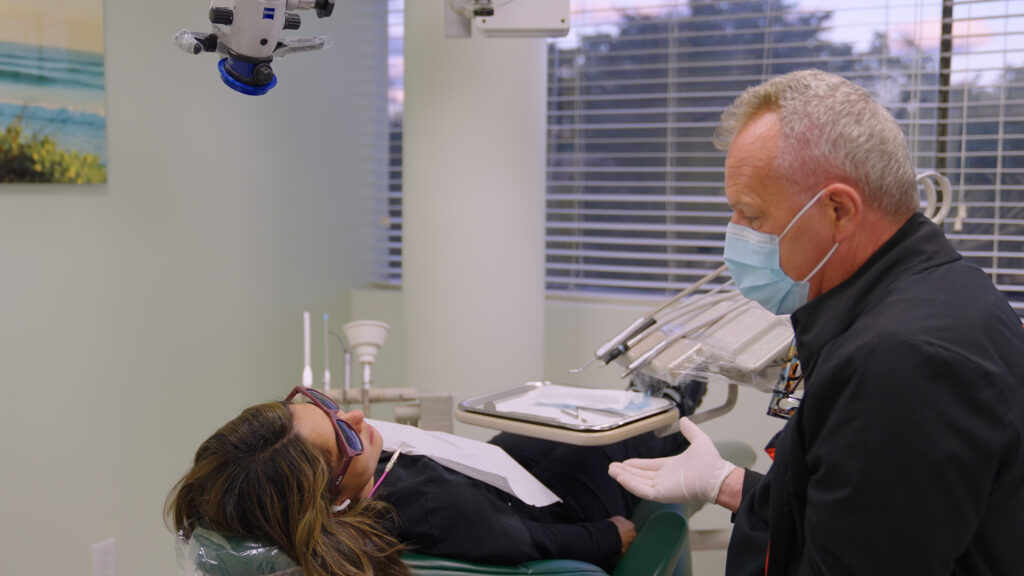
Will a Root Canal Hurt?
Myths vs facts
Root Canal Myths We Hear From Deerfield Patients
Most root canal fears come from outdated information. Modern root canals are done under local anesthetic and feel much like a filling, a treated tooth stays firmly anchored and keeps chewing, and the idea that root canals cause illness elsewhere has no valid scientific support, according to the American Association of Endodontists. Here are the three myths we hear most.
"A root canal leaves a dead tooth in your body."
A treated tooth is cleaned, disinfected and sealed. It stays firmly attached to your jaw through the living tissue around the root, and it keeps chewing for you. The infection is what was harming you, and treatment removes it.
"I watched The Root Cause. Root canals make you sick."
The American Association of Endodontists and the American Dental Association have both reviewed this claim. There is no valid scientific evidence that root canal treatment causes disease elsewhere in the body. The idea comes from “focal infection” research from the early 1900s that later studies could not reproduce.
"Pulling it is always cheaper."
It is cheaper on the day. But replacing a missing tooth with an implant or bridge usually costs more over time than saving it, and leaving the gap empty can let neighboring teeth shift and the bone shrink.
55+ & seasonal residents
For Century Village East and Seasonal Residents
Many of our Deerfield patients live in Century Village East and the other 55+ communities west of I-95, or spend only the winter here. We check Medicare Advantage dental benefits before treatment, plan around your flight home, coordinate with your physician on medications and welcome a family member at the consultation.
- Medicare Advantage. Bring your card. We’ll check your dental benefits before treatment.
- Here for the season? We can usually schedule treatment so it’s finished before your flight home, and we’ll send your records and images to your dentist up north.
- Blood thinners, heart conditions, bisphosphonates. Tell us everything you take. Never stop a blood thinner on your own. Dr. Mitchell will coordinate with your physician when needed.
- Bring a family member if you’d like a second set of ears. They’re welcome in the consultation.
Directions
Getting to Our Office From Deerfield Beach
Our office is at 900 Glades Road, Suite 3A, Boca Raton, three exits north of Hillsboro Boulevard on I-95. From Deerfield Beach, take I-95 north to the Glades Road exit (Exit 45) and head east; the office is just east of the highway, near Florida Atlantic University. Weekday drive times are in the table below.
Tooth Savers – Dr. Glen B. Mitchell Endodontics
900 Glades Road, Suite 3A, Boca Raton, FL 33431
Mon–Fri, 9:00 am – 5:00 pm · (561) 368-3636
From I-95: take I-95 north from the Hillsboro Boulevard exit (Exit 42) to the Glades Road exit (Exit 45) and head east. The office is on Glades Road just east of the highway, near Florida Atlantic University.
| Starting from | Route | Weekday drive |
|---|---|---|
| Deerfield Beach International Fishing Pier | A1A or Hillsboro Blvd → I-95 north → Glades Rd east | 16–24 min |
| Century Village East (W Hillsboro Blvd) | Hillsboro Blvd east → I-95 north → Glades Rd east | 14–26 min |
| Quiet Waters Park (Powerline Rd) | Powerline Rd north → Glades Rd east | 16–40 min |
| Deerfield Beach Tri-Rail station | I-95 north → Glades Rd east | 9–18 min |
Typical drive times leaving at 9:00 am on a weekday, from Google Maps. Traffic varies, so allow extra time.
Finding us: Suite 3A, 900 Glades Road. Call (561) 368-3636 if you need help with parking or directions.
We serve all of Deerfield Beach, including ZIP codes:
Urgent help
Dental Emergency in Deerfield Beach? What to Do Right Now
Call (561) 368-3636 for severe tooth pain, a cracked or broken tooth, or swelling limited to the gum; we hold weekday time for patients in pain. Go to the emergency room or call 911 instead if swelling spreads into your face or neck, or if you have a fever or trouble swallowing or breathing.
Call us at (561) 368-3636 if you have:
- Severe or throbbing tooth pain
- A cracked or broken tooth
- Swelling limited to the gum near one tooth
- A filling or temporary that fell out after a root canal
Go to the ER or call 911 if you have:
- Swelling spreading into your face, under your jaw or toward your eye
- Fever along with dental swelling
- Trouble swallowing or breathing
The nearest full emergency department to most of Deerfield is Broward Health North, 201 E Sample Road.
Knocked out a tooth at the pier, at Quiet Waters or on the boat?
Pick it up by the crown (the white part), not the root. If it’s dirty, rinse it briefly without scrubbing. Try to put it back in the socket and bite gently on a cloth. If you can’t, keep it in milk or inside your cheek. Get to a dentist or endodontist as fast as possible, ideally within 30 to 60 minutes.
After hours: Our office hours are Monday to Friday, 9 am to 5 pm. Our office is open Monday through Friday. During hurricane season (June 1 – November 30), During storms, please call ahead before driving to the office..
FAQ
Deerfield Beach Root Canal FAQs
These are the questions Deerfield Beach patients ask us most, answered briefly: whether there’s a board-certified endodontist nearby, what a root canal costs, whether it hurts, how long it takes and what Medicare covers. If your question isn’t here, call (561) 368-3636 and our team will be glad to help.
Is there a board-certified endodontist near Deerfield Beach?
Yes. Dr. Glen B. Mitchell is a Diplomate of the American Board of Endodontics. His office is at 900 Glades Road in Boca Raton, about 10 to 20 minutes north of Deerfield Beach on I-95, from the Hillsboro Boulevard exit to Glades Road.
How much does a root canal cost near Deerfield Beach?
It depends on the tooth (molars cost more than front teeth), whether it’s a first treatment or a retreatment, and your insurance. Many dental plans pay part of the cost after your deductible. We give you a written estimate and can request a pre-treatment estimate from your insurer before you commit. Remember to budget for the crown too.
How do I know if I actually need a root canal?
A specialist exam settles it. Dr. Mitchell uses cold testing, bite and tapping tests, digital X-rays and a 3D CBCT scan to see whether the nerve is inflamed, dead or infected. If the tooth only needs a filling or crown, or can’t be saved, he’ll tell you. We also offer second opinions.
Is a root canal better than pulling the tooth and getting an implant?
When the tooth can be restored, saving it is usually the better choice. You keep your natural tooth, treatment is faster, and it usually costs less overall than an extraction plus implant. Extraction makes sense when the root is fractured or there isn’t enough healthy tooth left.
Does a root canal hurt?
The treatment usually feels like having a filling, because the tooth is fully numb. Most people feel much better afterward, since the infected nerve was the source of the pain. Expect some tenderness for a few days, which over-the-counter pain relievers usually control.
How long does a root canal take?
Most treatments take about 1 to 2 hours in a single visit. Molars, retreatments and teeth with severe infection sometimes need two visits. After that, your general dentist places the crown or permanent filling.
Do I need a crown after a root canal?
Back teeth (premolars and molars) almost always need a crown to protect them from cracking. Front teeth sometimes only need a filling. Have the final restoration placed within a few weeks, because a temporary filling isn’t meant to last.
My old root canal hurts again. Can it be fixed?
Often, yes. Pain or a new infection years later usually means a canal was missed, the seal leaked, or the crown broke down. Root canal retreatment can usually save the tooth. If it can’t, endodontic microsurgery (apicoectomy) may be an option.
Does Medicare cover root canals?
Traditional Medicare (Parts A and B) doesn’t cover most dental care, including root canals. Many Medicare Advantage plans include dental benefits, but coverage varies. Call us with your plan information and we’ll check before your appointment.
Can I be seen the same day if I'm in pain?
We set aside time on weekdays for patients in pain. Call (561) 368-3636 as early in the day as you can. If you have facial swelling that’s spreading, a fever, or trouble swallowing or breathing, go to the nearest emergency room first.

Meet your endodontist
About Dr. Glen B. Mitchell, DDS
Dr. Glen B. Mitchell is a board-certified endodontist and a Diplomate of the American Board of Endodontics. He earned his DDS at Northwestern University and completed a general practice residency at the VA and University of Michigan hospitals and an oral surgery fellowship at the University of Michigan. He then earned his Certificate in Endodontics at Columbia University. Before moving to Boca Raton he practiced in Manhattan and Long Island. He is a member of the American Association of Endodontists and the Florida Association of Endodontists.

Save Your Tooth. Call Today.
(561) 368-3636 · Monday–Friday, 9 am – 5 pm
Same-day weekday visits for tooth pain · Reports sent to your dentist the same day
Also serving: Lighthouse Point · Pompano Beach · Coconut Creek · Boca Raton · All areas we serve